One operating relationship. Clear responsibility across the full setup.
WeCare stays involved from requirement validation and food-operation preparedness through ongoing operations, issue resolution, and structural improvement.


One relationship. Clear ownership.
The enterprise shares the requirement. WeCare manages the operating response.
Enterprise client
WeCare
Managed operating setup
One continuous model—from requirement to improvement.
Each stage strengthens the next. The model is designed as one connected operating relationship, not a set of isolated services.
Stage 01
Start with the real operating requirement.
Before preparing the food operation, WeCare validates the workplace requirement and identifies gaps, uncertainty, or conflicting inputs.
Assessment outcomes
Outcome informs preparedness, serviceability review, and next-step planning.
Stage 02
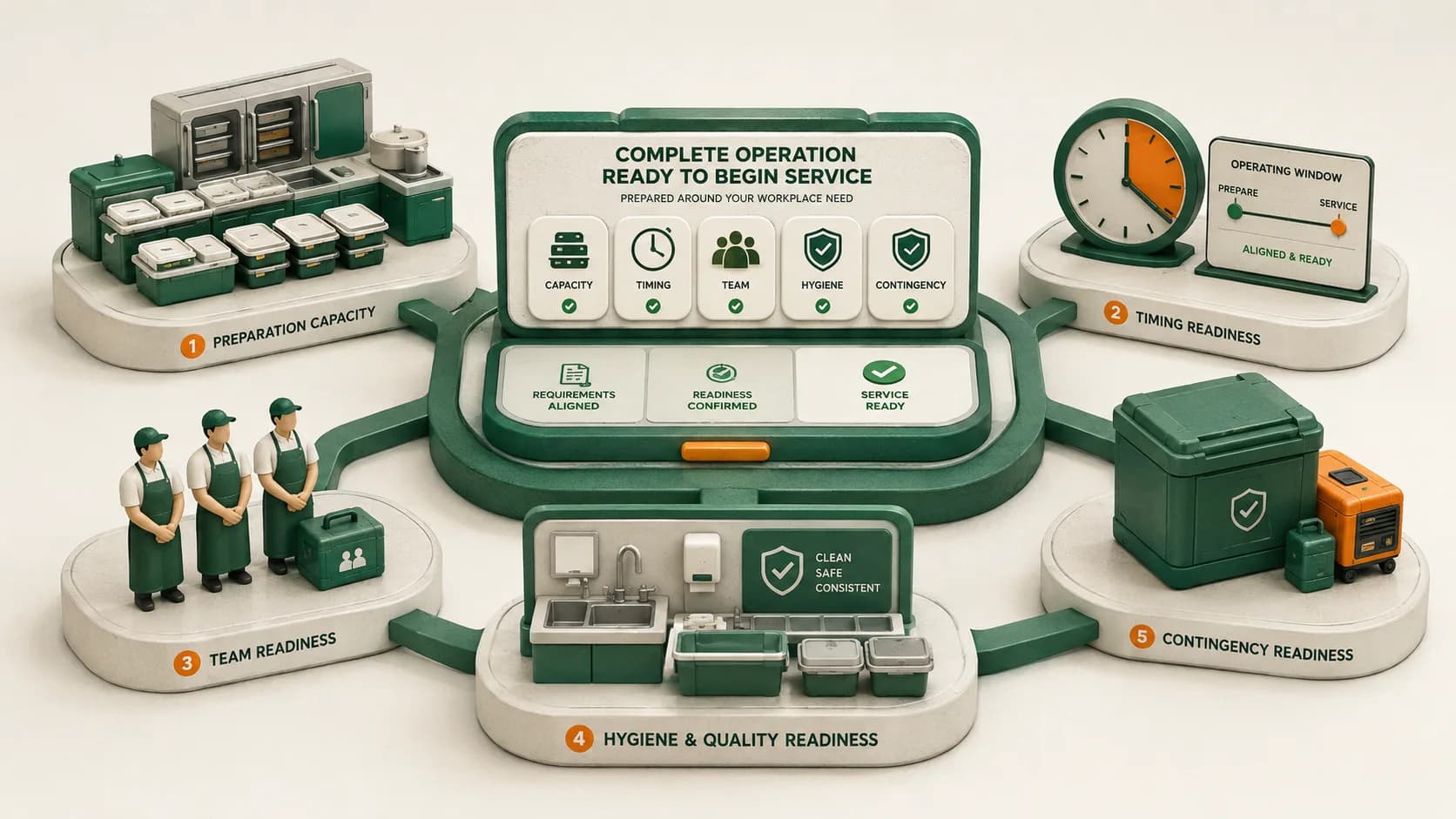
Prepare the complete operation around what the workplace actually needs.
Stage 03
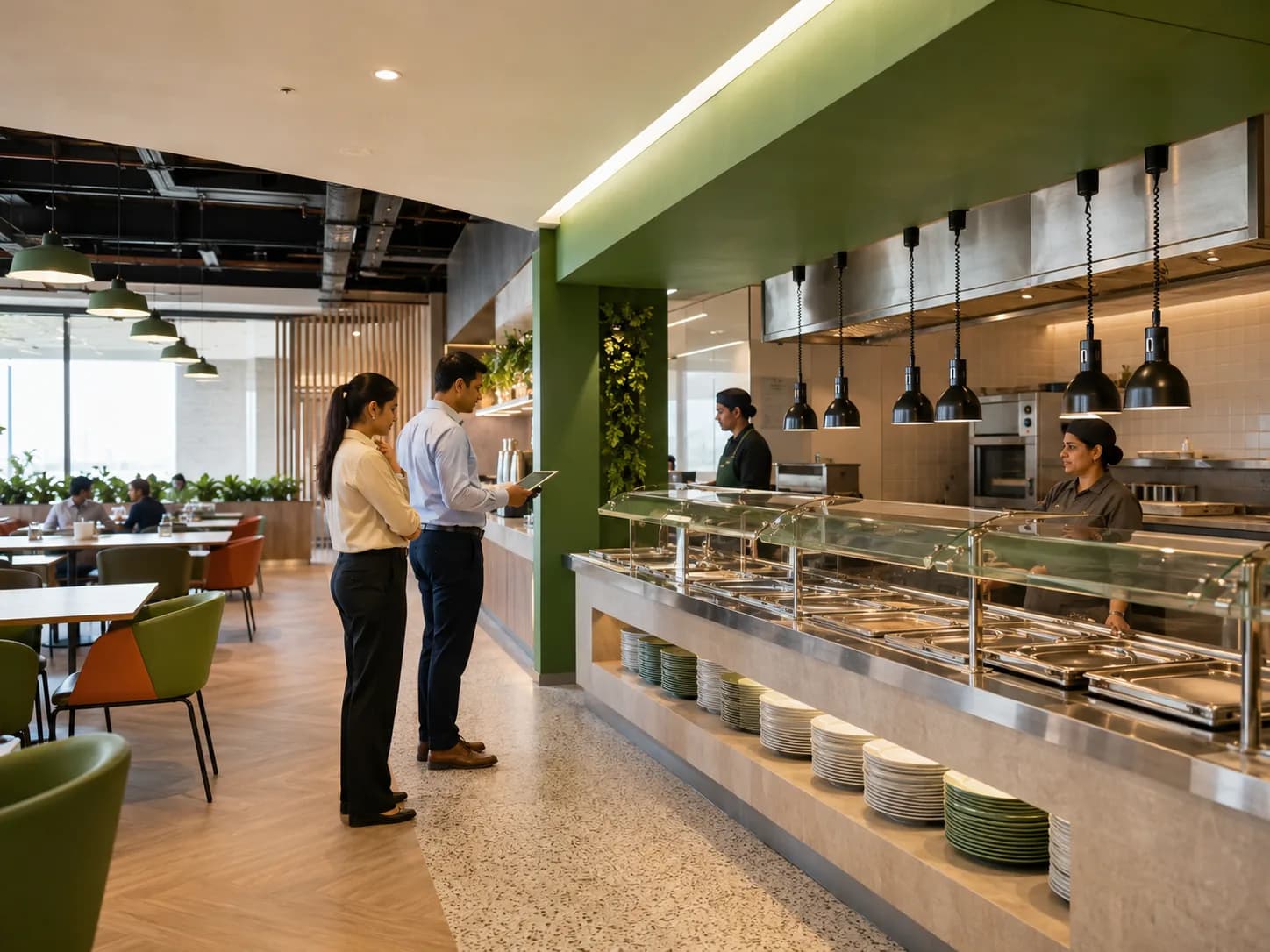
Align expectations before service begins.
Roles, schedules, preparation standards, communication, reporting, and escalation must be clear before the operating setup goes live.
01
Defined upfront
Service expectations and schedules are agreed before go-live.
02
Clear ownership
Roles and responsibilities are assigned to named functions.
Service & team alignment
03
Shared standards
Quality and hygiene expectations are documented and understood.
04
Escalation path
Communication, reporting, and escalation routes are confirmed.
Stage 04
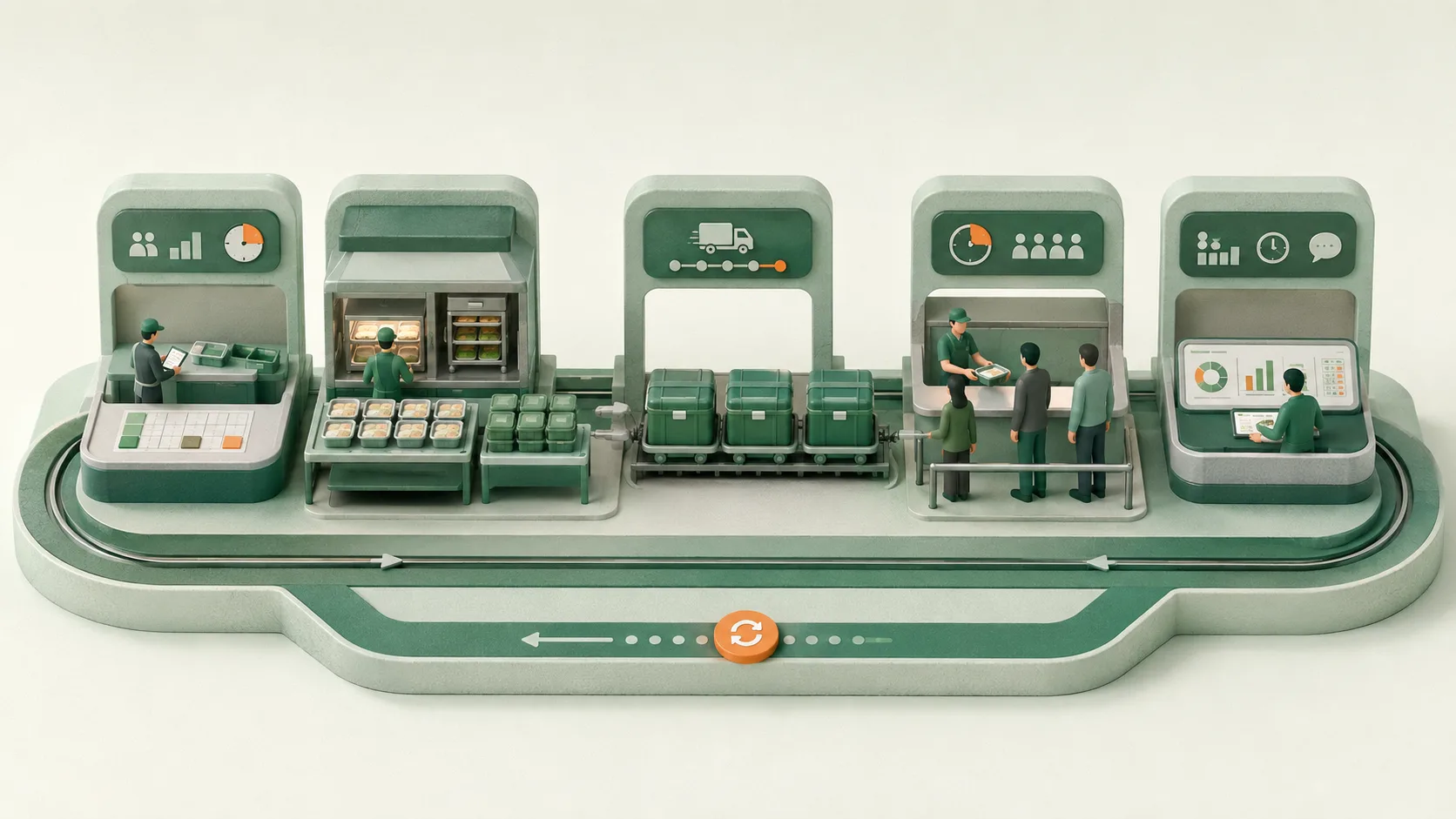
Keep recurring operations aligned as workplace needs change.
WeCare oversees preparation, service delivery, quality, coordination, feedback, and continuity across the recurring food program.
Stage 05
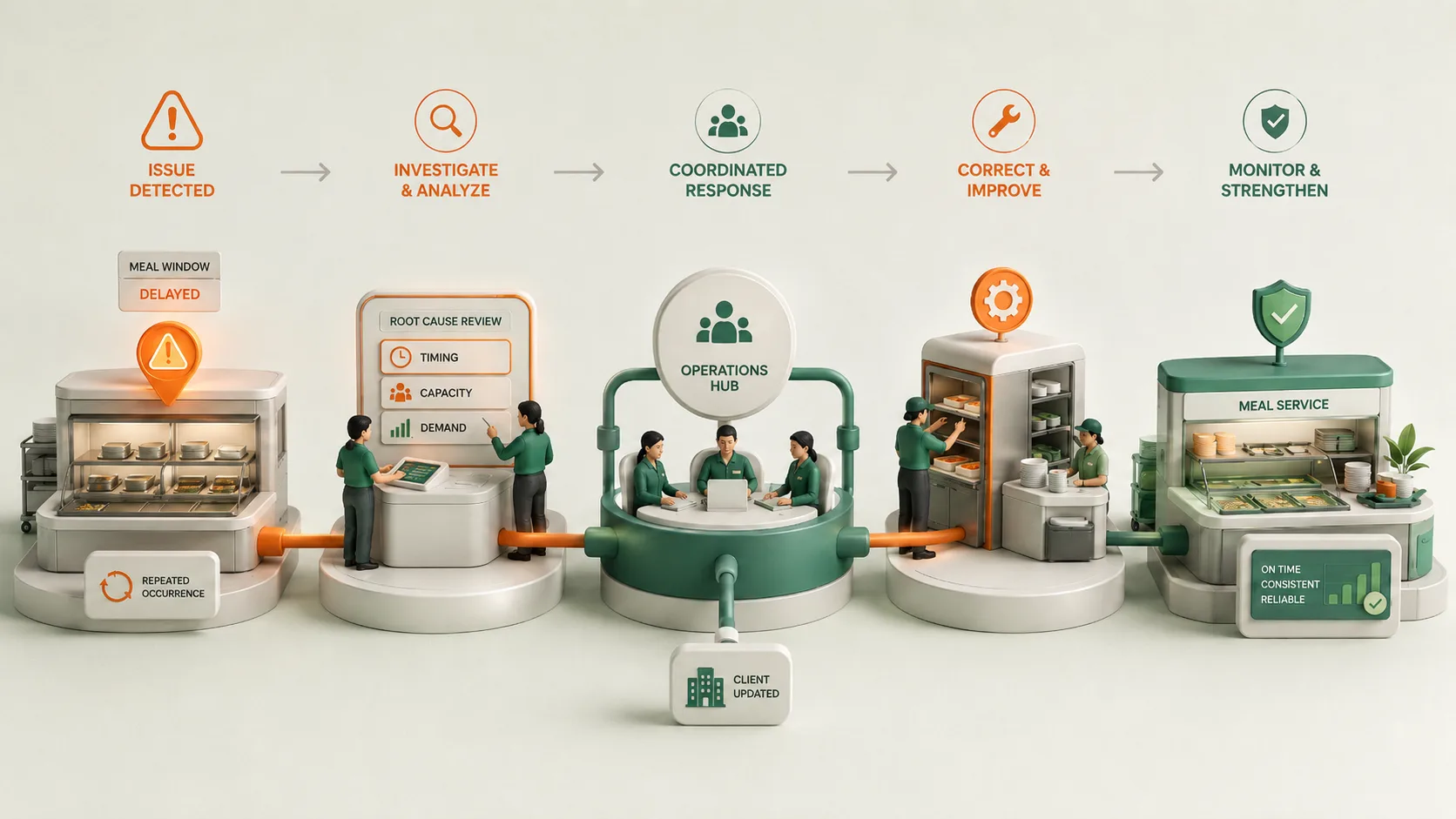
When an issue occurs, WeCare coordinates the response.
Stage 06
The response should become stronger when performance remains unstable.
Repeat failure does not automatically require a complete service change. The response depends on cause, severity, operating fit, evidence, and available alternatives.
01
First occurrence
Immediate correction
02
Issue repeats
Root-cause review
03
Problem continues
Stronger operational intervention
04
Performance remains unstable
Structural operating improvement
Evidence close to the operating claim.
Use verified outcomes, approved examples, and process evidence only.
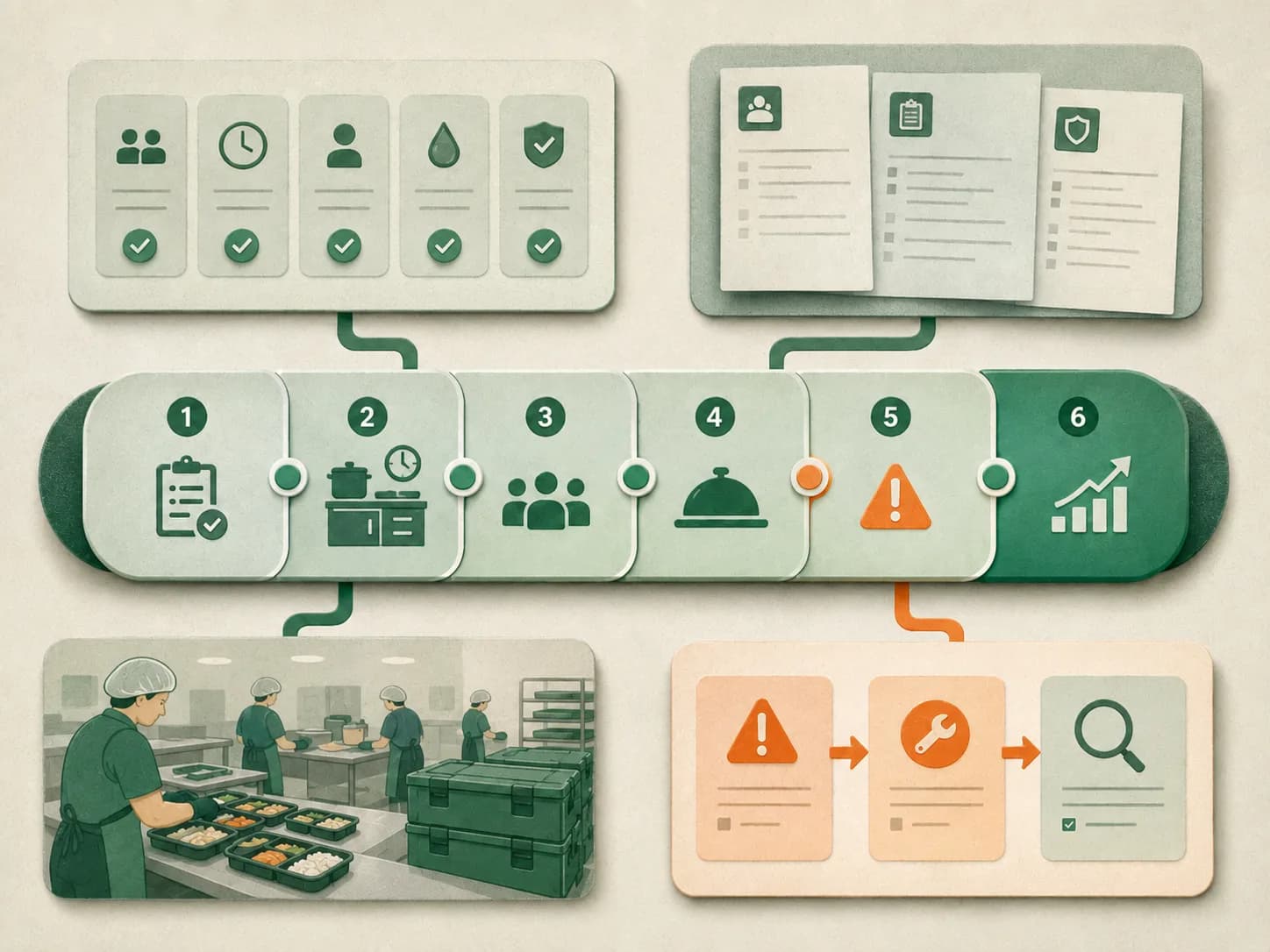
Evidence class: Preparedness checklist
Food operation preparedness checklist
Evidence class: Operating framework
Ongoing operations framework
Evidence class: Process evidence
Issue-resolution workflow
Evidence class: Approved anonymized example
Approved anonymized operating example
Evidence class: Framework evidence
Operational improvement framework
Explore the situation closest to your current operation.

Underperforming Food Operations
When results fall short, WeCare investigates cause and drives structural improvement.
Explore this route →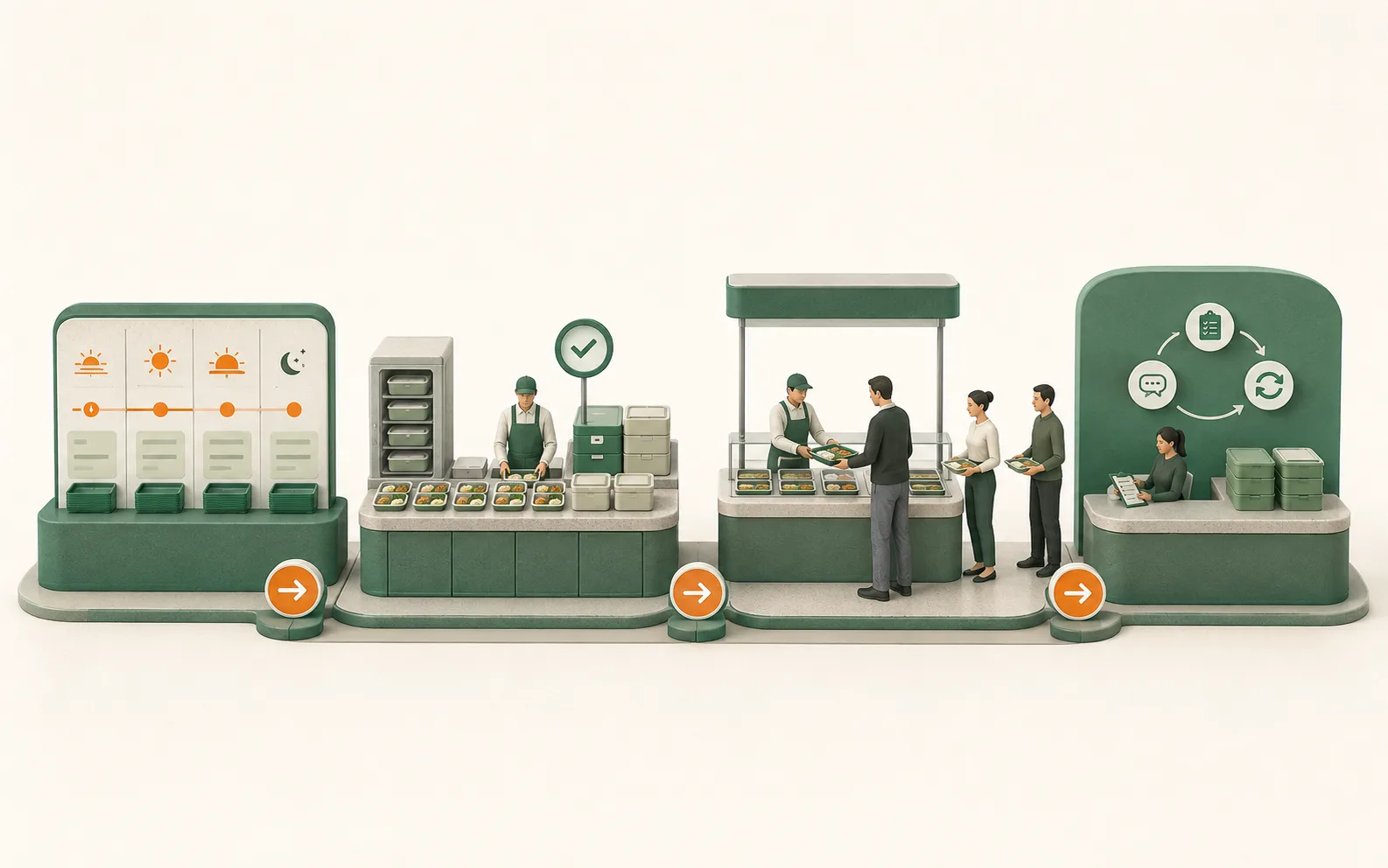
Recurring Workplace Meals
Steady, predictable food operations across a stable workforce.
Explore →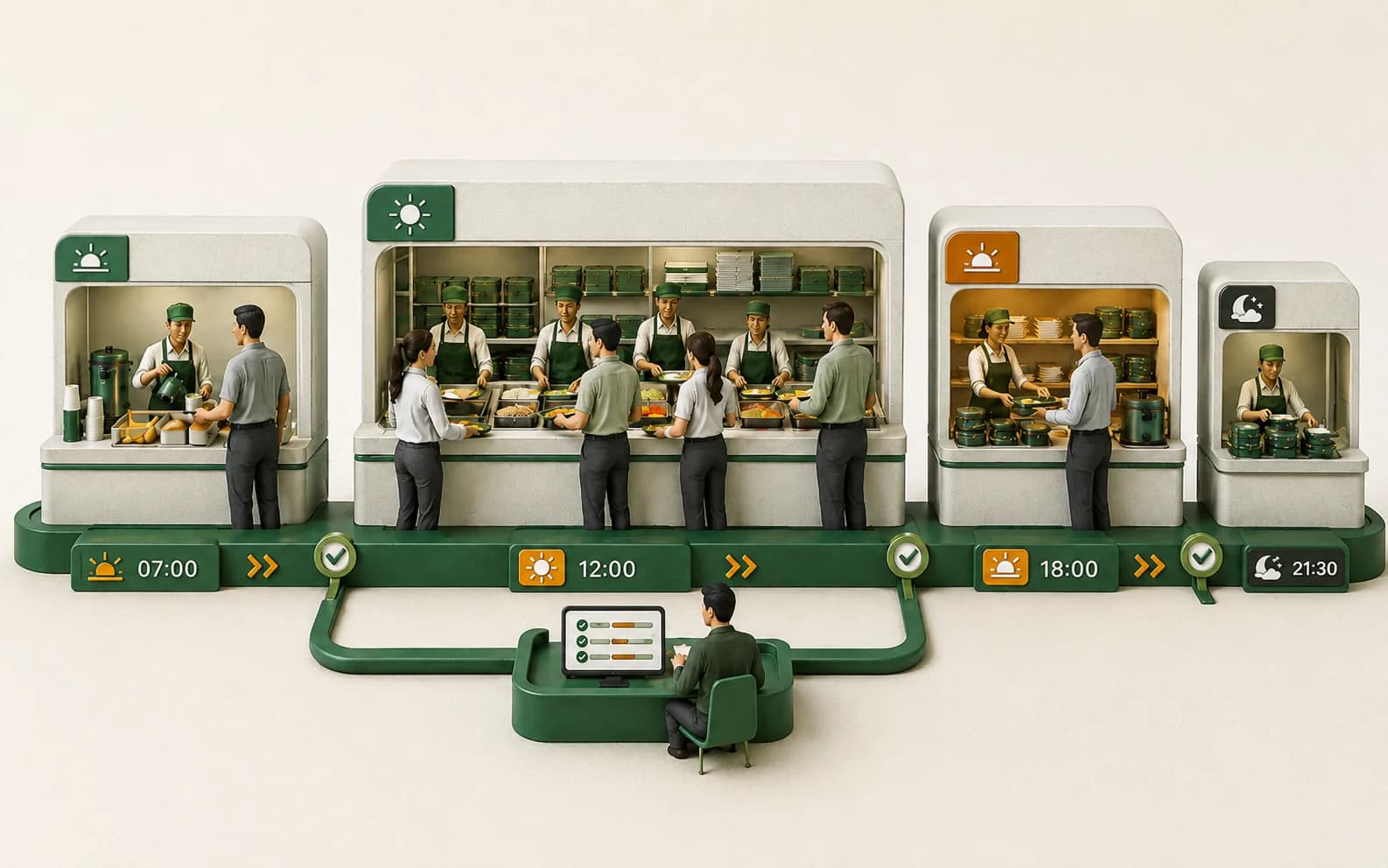
Multi-Shift Food Programs
Coordinated coverage across overlapping or continuous shifts.
Explore →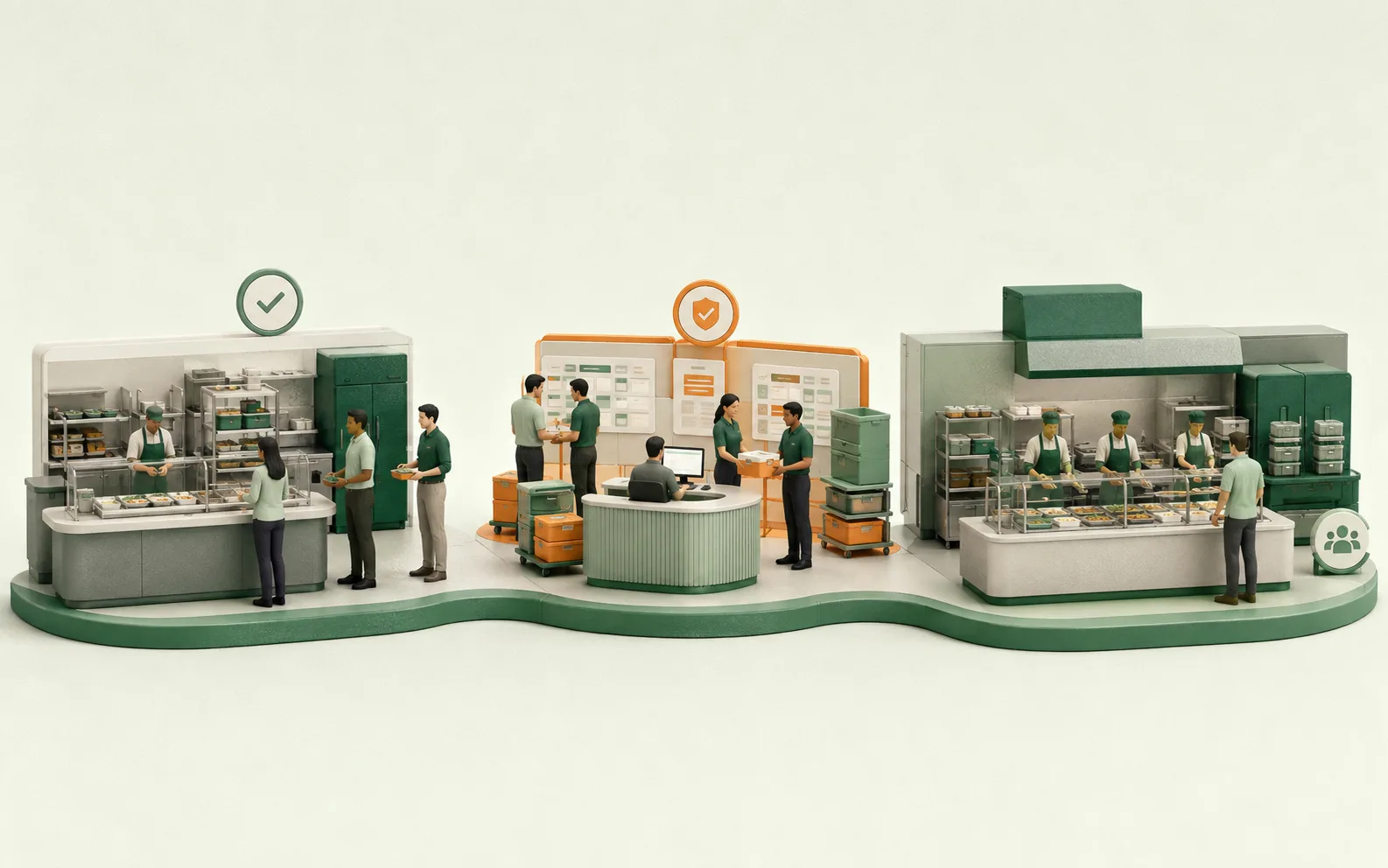
Food-Service Transitions
Structured handover when moving between operating setups.
Explore →Where is your current food operation breaking down?
Start with the requirement, recurring issue, or operating concern creating the most work for your team.